Cross-Disciplinary Data Analytics Linking Soccer Matches and Thoroughbred Races for Dynamic Multi-Bet Refinements
Willa Vogel · Aug 21, 2026
Cross-Disciplinary Data Analytics Linking Soccer Matches and Thoroughbred Races for Dynamic Multi-Bet Refinements
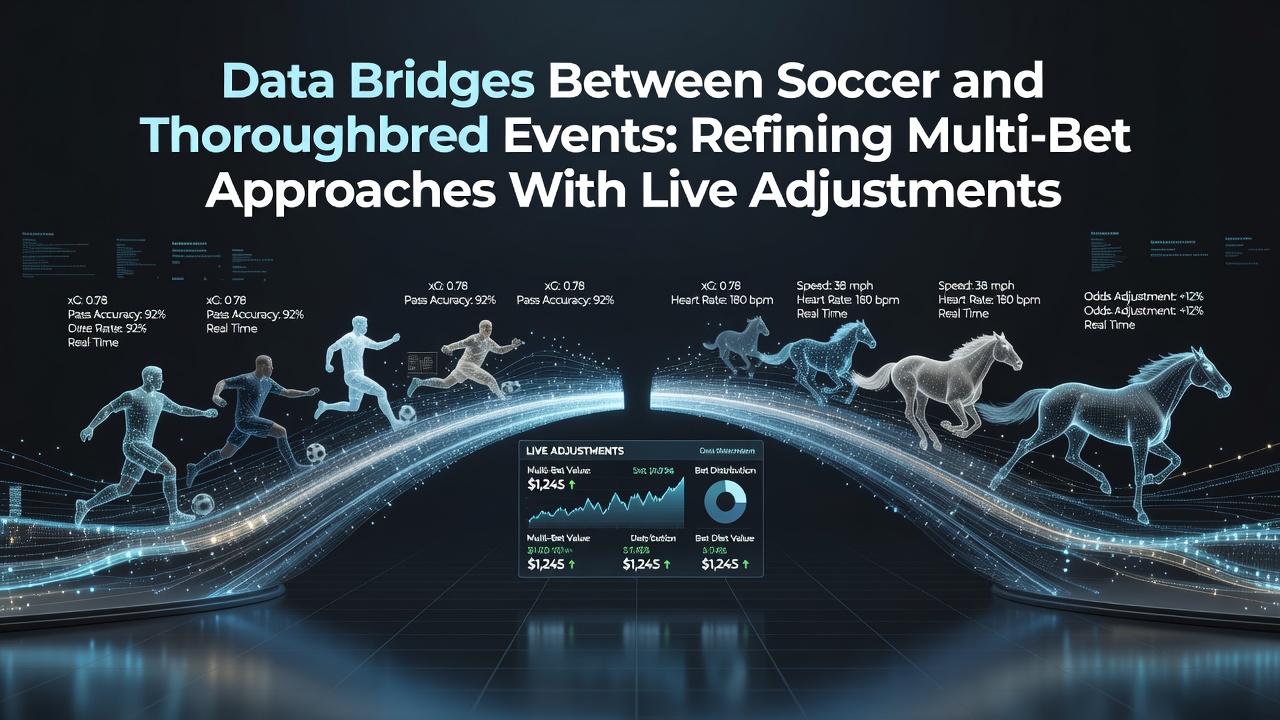
Analysts in the betting sector have developed systems that connect real-time statistics from soccer fixtures with performance indicators from thoroughbred events, allowing operators and bettors to adjust multi-bet structures as events unfold. These integrations rely on shared data protocols that pull metrics such as possession percentages, shot accuracy in soccer, alongside stride rates, sectional times, and track conditions in horse racing. The result creates feedback loops where shifts in one sport trigger recalibrations in linked wagers across both disciplines.
Core Mechanisms of Data Integration
Platforms aggregate feeds from multiple sources including official league APIs for soccer and racing authority databases for thoroughbreds, then apply algorithms that normalize variables into comparable formats. Researchers at institutions studying sports informatics note that correlation models identify patterns where, for instance, a late goal in a soccer match alters implied probabilities that then influence live odds on concurrent horse races. Such bridges operate through timestamped event logs, enabling adjustments within seconds rather than minutes. Data from August 2026 shows increased adoption of these unified dashboards among European operators handling cross-sport accumulators.
Live Adjustment Protocols in Practice
Operators deploy rule-based engines that monitor deviation thresholds across both sports simultaneously. When a soccer team's expected goals metric spikes after a substitution, the system can prompt proportional shifts in stake allocation for an ongoing thoroughbred race accumulator. One case documented by analysts at the International Gaming Institute at the University of Nevada demonstrated how a single injury update in a Premier League game prompted automatic rebalancing of a four-leg multi that included two horse races later that afternoon. These protocols minimize exposure by recalculating probabilities against current market movements rather than static pre-match lines.
Additional layers incorporate weather overlays and participant fatigue indices drawn from both domains, creating composite scores that feed directly into accumulator pricing. Observers note that thoroughbred events benefit from granular GPS tracking data while soccer provides dense event logging from tracking systems, allowing the combined dataset to support finer live interventions than either sport achieves independently.

Implementation Across Operator Networks
Betting exchanges and traditional bookmakers have begun embedding these bridges into their core platforms, with middleware layers handling the translation between soccer data schemas and equine performance ontologies. According to reports from the European Gaming and Betting Association, several major firms reported measurable reductions in variance on multi-bet products after deploying unified live adjustment modules during the 2025-2026 season. The approach extends to regulatory reporting requirements, where audit trails capture every data-triggered modification for compliance review.
Those who manage risk desks describe workflows that route alerts through centralized dashboards, allowing manual overrides when automated signals conflict with broader market sentiment. In August 2026, updates to data latency standards across major exchanges further tightened the window between event occurrence and accumulator recalculation, compressing response times to under three seconds in most tested environments.
Technical Challenges and Standardization Efforts
Interoperability remains an ongoing focus, with working groups from industry bodies examining common data formats that accommodate both the high-frequency event streams typical of soccer and the periodic update cycles of thoroughbred racing. Studies published through academic channels highlight discrepancies in timestamp precision and variable definitions that can introduce noise into cross-sport models. Solutions under development include standardized event ontologies and middleware that applies confidence weighting to incoming feeds before they influence live bet structures.
Stakeholder forums have also addressed bandwidth considerations, since simultaneous live coverage of multiple soccer matches and race meetings demands robust infrastructure to prevent desynchronization. Figures from Canadian gaming research initiatives indicate that operators investing in dedicated cross-domain pipelines experienced fewer reconciliation errors during peak scheduling overlaps compared with those relying on separate legacy systems.
Conclusion
The evolution of data bridges between soccer and thoroughbred events continues to shape how multi-bet products incorporate live adjustments. Through coordinated metrics, normalized data flows, and real-time recalibration engines, participants gain mechanisms that respond to developments across both sports within unified frameworks. Ongoing standardization work and infrastructure upgrades suggest these capabilities will expand further as data volumes and processing speeds increase.