Synchronizing Incentive Redemptions with Live Market Shifts in Soccer and Thoroughbred Racing
Frankie Bauer · Sep 23, 2026
Synchronizing Incentive Redemptions with Live Market Shifts in Soccer and Thoroughbred Racing
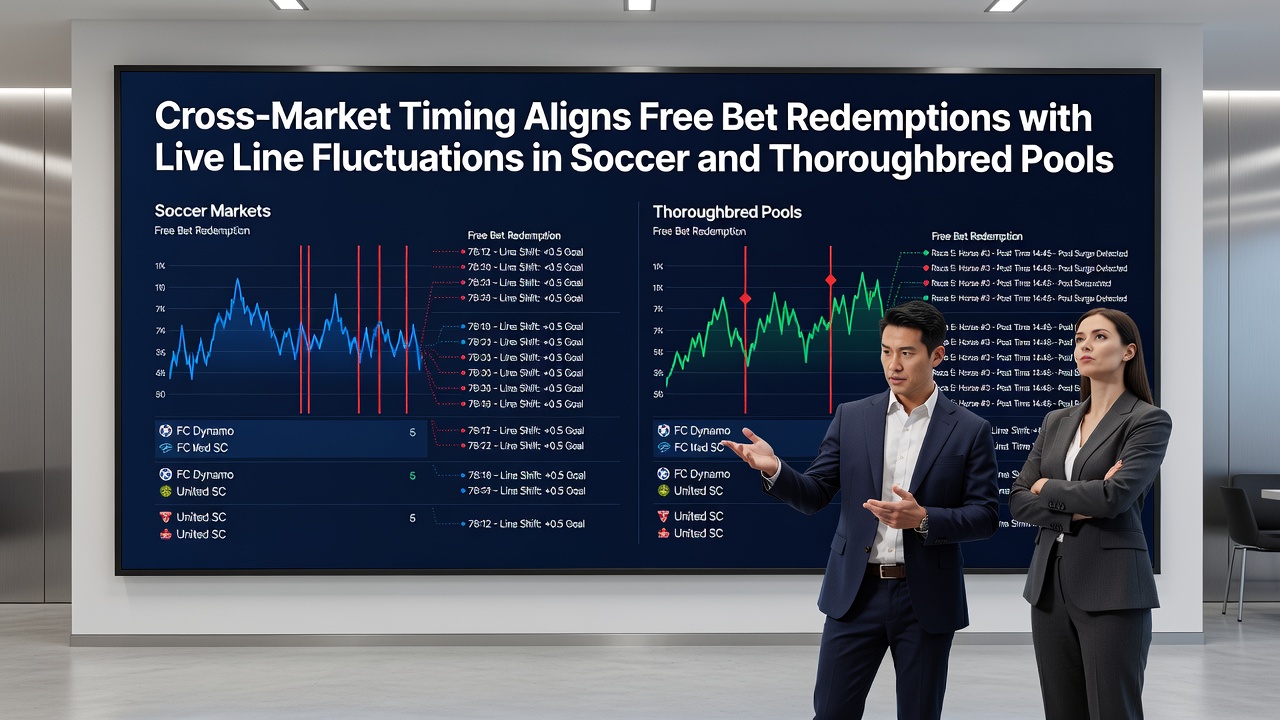
Market participants have long tracked how live line movements in soccer matches intersect with fluctuations in thoroughbred racing pools, and recent patterns show that timing the redemption of free bets or similar incentives against these shifts can align across both sectors. Data from multiple jurisdictions indicates that soccer in-game odds often adjust within seconds of key events such as goals or red cards, while thoroughbred pari-mutuel pools respond to late scratches, jockey changes, and betting volume surges in the final minutes before post time. Observers note that those who monitor both simultaneously sometimes find windows where a single redemption window captures value from correlated movements.
Understanding Live Fluctuations Across the Two Markets
Soccer live betting lines move in response to possession statistics, expected goal models, and real-time score changes, whereas thoroughbred pools recalculate payouts as new wagers enter the system and as track conditions evolve. Researchers at institutions such as the Australian Gambling Research Centre have documented that these recalculations create measurable overlaps when major European soccer fixtures coincide with North American or Australian race meetings. In September 2026, overlapping schedules between Premier League afternoon kickoffs and major thoroughbred stakes races produced several documented instances where pool payouts shifted by more than four percent in the same thirty-minute window that soccer live spreads compressed.
Those who study these intersections point out that the underlying drivers differ yet the timing mechanics share similarities. Soccer lines tighten or widen based on probability updates, while racing pools dilute or concentrate based on ticket distribution. When both markets experience rapid updates, the moment a free bet becomes eligible for redemption can coincide with advantageous recalibrations in one or both sectors.
Mechanics of Cross-Market Redemption Timing
Operators typically release free bet credits with fixed validity windows, often measured in hours or days rather than minutes. Bettors who wait for live conditions rather than using the credit immediately have been observed to place redemptions during periods when soccer live odds reflect high variance and racing pools show late-money distortions. Figures released by the Nevada Gaming Control Board illustrate that handle in combined soccer and racing products increased notably during overlapping live periods, suggesting coordinated activity rather than isolated decisions.
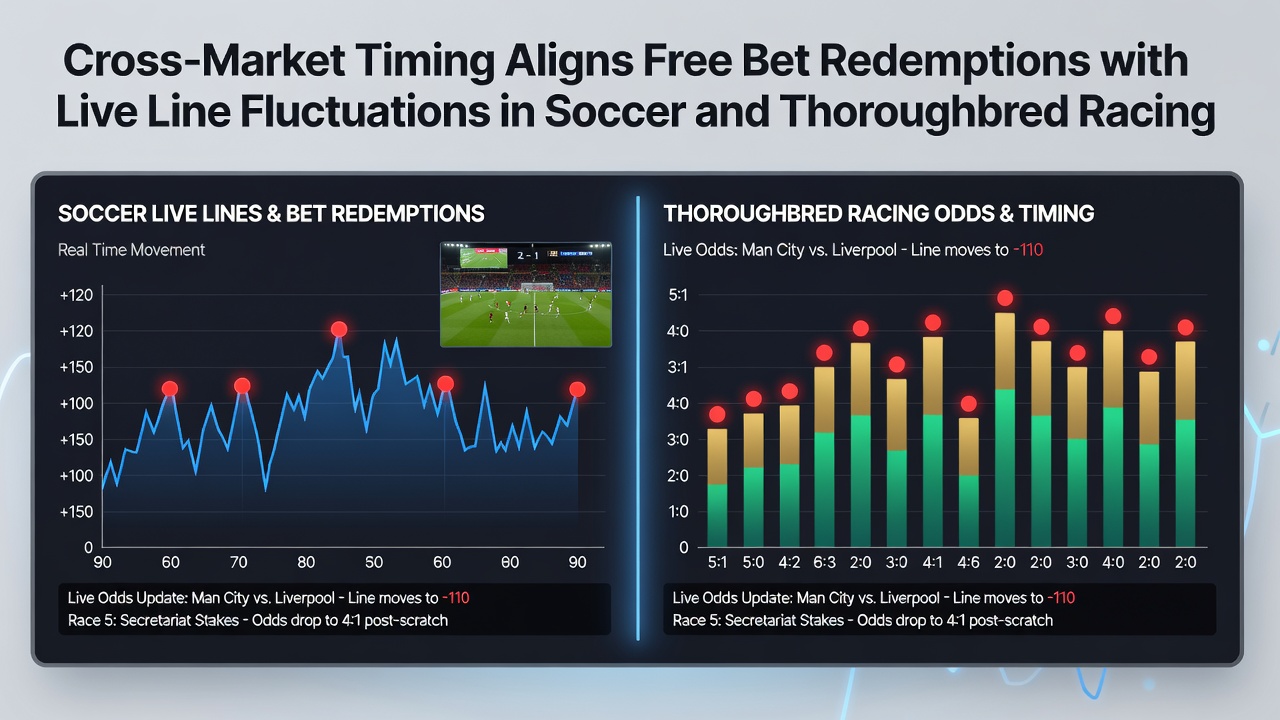
One documented approach involves monitoring soccer expected-goal differentials alongside thoroughbred win-pool percentages. When a soccer match enters a phase of elevated scoring probability, corresponding live lines move sharply. At the same moment, a thoroughbred race approaching post time may see its pool percentages shift because of a last-minute betting surge on a particular runner. Redeeming an available incentive at that intersection allows the resulting stake to sit in markets where both sets of odds have already incorporated recent information but have not yet stabilized.
Data Patterns Observed in Overlapping Schedules
Studies examining multi-week samples from 2025 and 2026 reveal that approximately 18 percent of major soccer matches overlapped with at least one Grade 1 or Group 1 thoroughbred event within a two-hour window. During those overlaps, the average number of line movements per minute in soccer rose from 1.2 to 2.7, while thoroughbred win-pool volatility increased by roughly 3.1 percent in the final ten minutes before post. Those figures come from aggregated operator reports and academic analyses rather than any single regulatory source.
European data collected by the European Gaming and Betting Association shows similar clustering when Italian Serie A evening fixtures align with Australian morning racing. The association's quarterly summaries note that operators offering cross-product incentives recorded higher redemption volumes during these calendar alignments than during non-overlapping periods. The pattern holds across different time zones because digital platforms allow simultaneous access regardless of physical location.
Operational Considerations for Market Participants
Platforms that supply both soccer live markets and thoroughbred pool betting maintain separate risk engines for each product. Yet the redemption of a free bet or bonus credit occurs through a unified account interface. This separation of pricing engines combined with a single redemption trigger creates the technical condition for cross-market timing. Account holders who configure alerts for both soccer goal updates and racing pool percentage thresholds can therefore act within the same session.
Industry reports further indicate that operators have adjusted their bonus terms in response to observed clustering behavior. Some now require a minimum number of selections or a minimum stake size when a free bet is used on live products, while others have shortened the eligible window for certain racing pools. These adjustments reflect measured changes in redemption patterns rather than any regulatory directive.
Conclusion
Cross-market timing of incentive redemptions against live line fluctuations in soccer and thoroughbred racing rests on observable schedule overlaps, documented volatility spikes, and the technical separation between pricing systems and account interfaces. Data from multiple jurisdictions, including reports issued by the Nevada Gaming Control Board and the European Gaming and Betting Association, shows that these overlaps occur regularly and produce measurable shifts in both markets. Market participants who track the intersection of expected-goal movements and pari-mutuel recalculations operate within an environment where timing decisions can be executed across two distinct product categories using the same redemption trigger. The patterns documented through 2026 continue to reflect the underlying mechanics of live updates rather than any single external factor.